
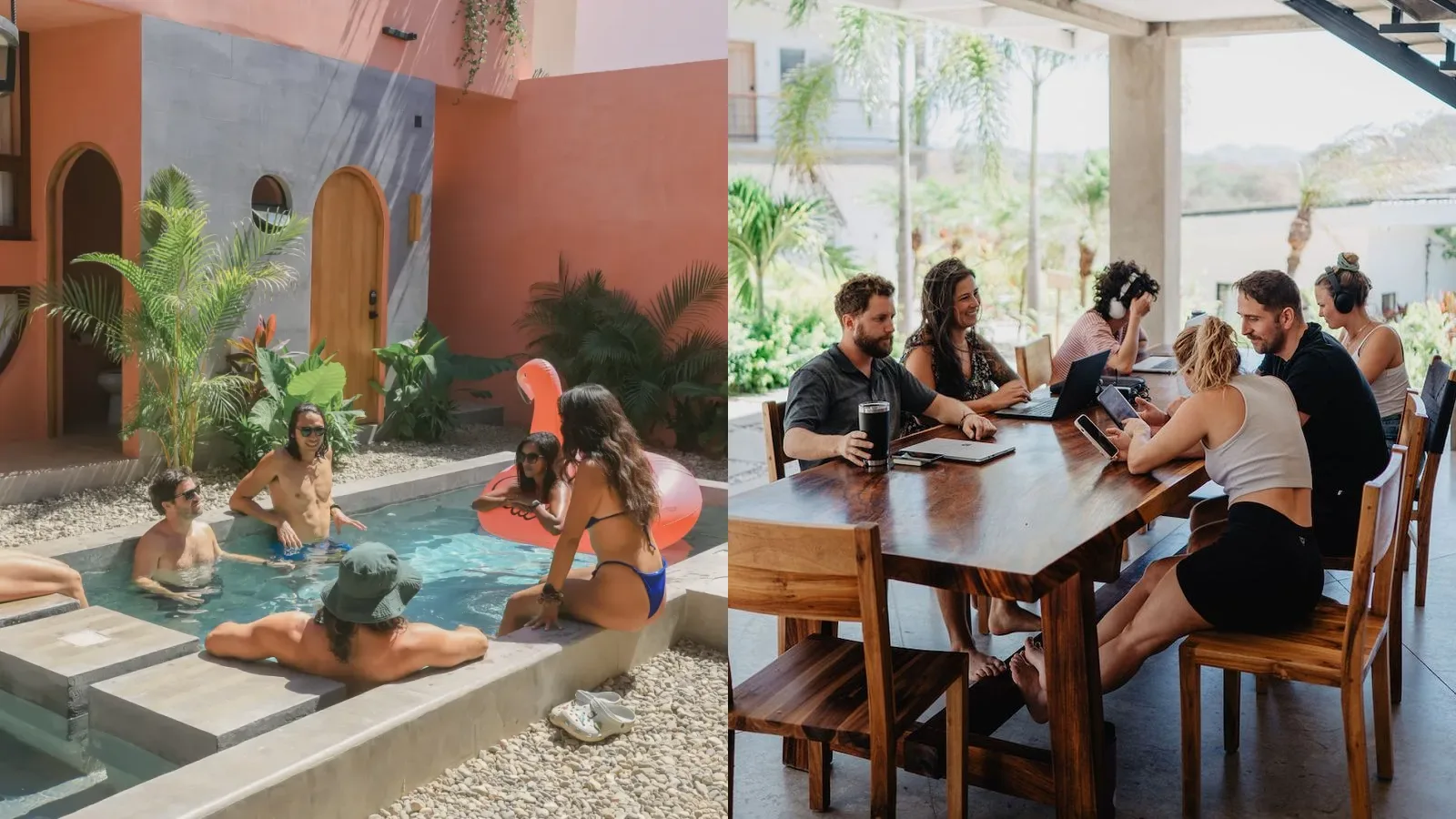
For a decade, if you were a digital nomad looking for somewhere to land, the answer was often the same: Selina. The hostel-coliving-coworking chain grew to more than 100 locations across Latin America, Europe and Asia, raised hundreds of millions of dollars, and went public at a valuation near $1.2 billion.
Then it fell apart. In July 2024, Selina Hospitality collapsed into insolvency and was delisted from the Nasdaq. Locations closed or were sold off around the world, and nowhere harder than Latin America, its biggest market — spots in Mexico, Costa Rica and beyond shut their doors or were rebranded under new owners. Remote Year, the other big corporate nomad brand, is gone too.
Here's the thing though: coliving didn't die. The nomads didn't stop coming. They just stopped booking the giant chain, and started finding the small, independent, owner-run spaces that never tried to become a global empire in the first place.
Nowhere was Selina bigger than Latin America, and nowhere is that shift clearer. So this is a guide to the independent colivings across the region that remote workers are actually choosing now. The catch with Latin America has always been that the best independent spaces are the hardest to find; they don't have big marketing budgets, so they get buried under the chains and the aggregators. Here they are.
Why the corporate coliving model broke
It's worth understanding why Selina failed, because it tells you exactly what to look for now.
Coliving works because it's small and personal. A good one feels like a house, not a hotel: a host who knows your name, a community of people staying long enough to become friends, a rhythm you settle into. That magic is hard to scale, and Selina tried to scale it to 100+ locations on venture money and debt. Growth got prioritized over community. Quality got uneven. When interest rates rose and the debt came due, the whole thing folded.
The lesson: the things that made coliving special were the things a corporate chain couldn't hold onto. Which is exactly why independent, owner-operated spaces are having their moment.
What actually makes a good coliving now
Before the list, four things worth checking wherever you go:
- Internet that genuinely works. Not "we have WiFi", but real infrastructure: fiber, ideally with a backup like Starlink and a battery so an outage doesn't kill your workday. Ask specifically.
- An owner who's actually there. Independent, owner-operated places live and die on the host caring. That's a feature, not a downside.
- Real community, not weekend churn. The best spaces attract long-term stayers, not a revolving door of two-night tourists. Weekly events and shared meals are a good sign.
- Small enough to feel like home. A dozen-odd rooms beats a 200-bed complex every time for the thing you actually came for.
The independent colivings in Latin America (2026)
These are the small, owner-run spaces we'd point a friend to, roughly north to south.
Mexico — Amplitude Coliving (Puerto Escondido)
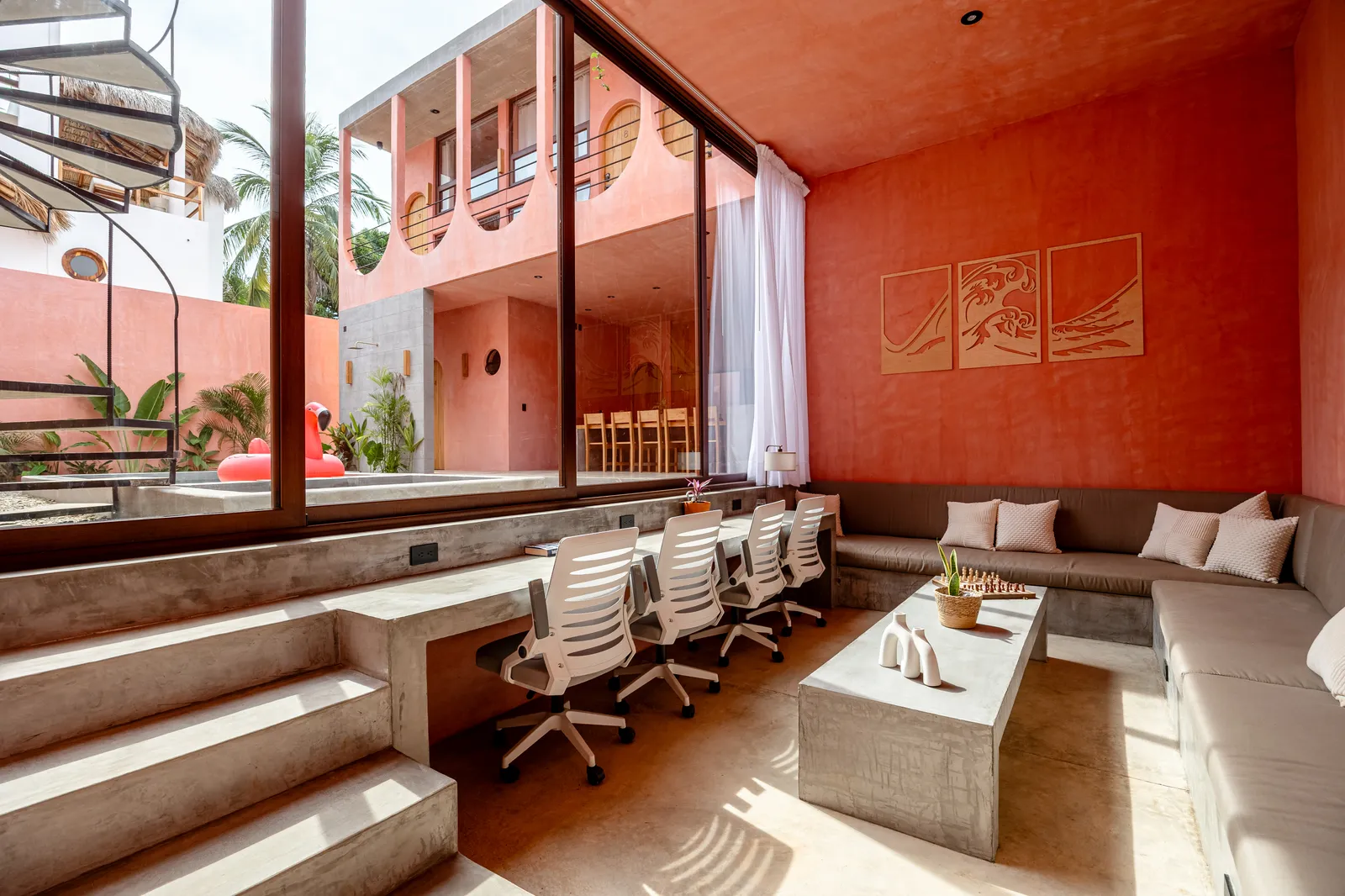
On the Pacific coast of Oaxaca, in the surf-and-remote-work neighborhood of La Punta, Amplitude was purpose-built for people who work online and want it to actually work. Dual fiber + Starlink with automatic failover and battery backup keeps you online through the outages, every room has a dedicated desk, and there's an air-conditioned coworking lounge just for guests. Nine private rooms and four loft apartments, weekly community events and complimentary weekend brunches, and a four-minute walk to the point. Owner-built and owner-run. Monthly stays from around $1,300.
Mexico & Colombia — Co404 (Oaxaca · San Cristóbal · Medellín)
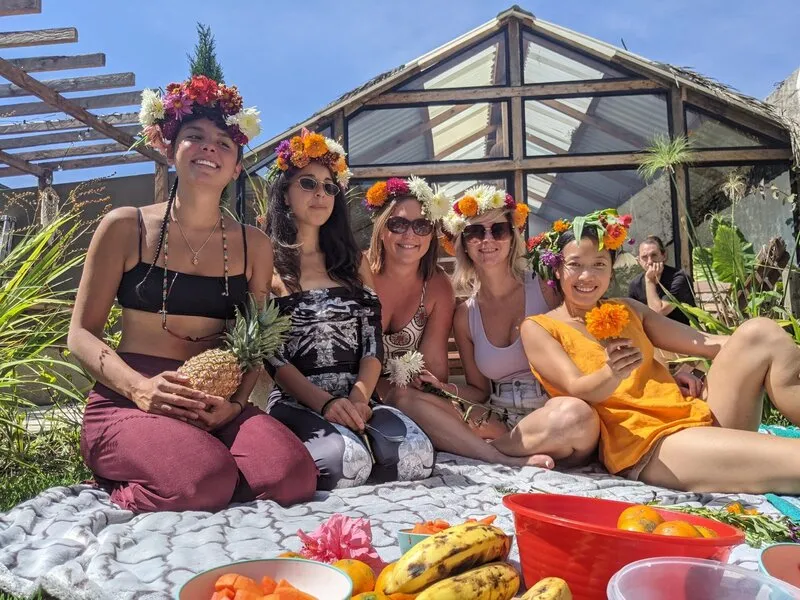
Co404 runs small, tight-knit coliving houses across Latin America, and community is clearly the whole point. Daily shared dinners, a dozen-plus weekly activities, fiber internet and focus-friendly coworking, all at genuinely accessible prices (rooms from around $400–570 a month). If you want to actually make friends and move between Latin American hubs with the same kind of crew, it's one of the best-run community setups in the region.
Roaming pop-up — Casa Basilico (LatAm chapters incl. Oaxaca & Pipa)
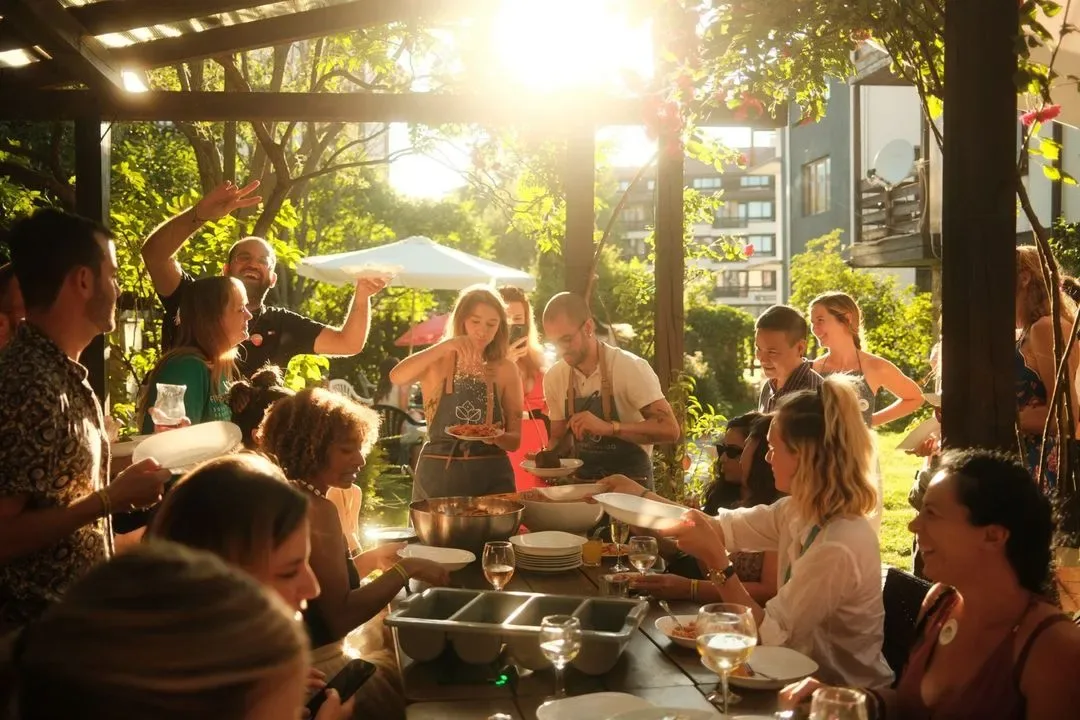
Not a fixed house but a traveling "pop-up foodie coliving" — its founders call it "a dinner party that travels." Each chapter takes over a rented venue in a new destination for about a month: a vetted group, daily communal dinners built around Italian cooking and local-market ingredients, laptop-friendly wifi, and weekend adventures shaped by whoever's at the table. Recent Latin American editions have run in Oaxaca City and Pipa, Brazil, with other chapters further afield in Portugal and Italy.
Nicaragua — Waves & Wifi (Popoyo)
On Nicaragua's Popoyo coast, Waves & Wifi is surf-and-work done right: 16 beds, the break a short walk away, an onsite cafe, solar-powered throughout, and a real coworking room with desks, monitors and call booths. A community manager plus weekly BBQs, pop-up dinners and dance classes keep it social.

Costa Rica — Locoworking (Sámara)
Costa Rica's original coworking-coliving, a three-minute walk from Sámara beach. 300 Mbps fiber, a well-structured coworking space with meeting rooms and free coffee, and packages that bundle in yoga, surf lessons and local excursions. Small, independent and genuinely community-run, exactly the balance-work-with-beach-life vibe the Pacific coast is made for.
How to choose
You don't need a chain with a loyalty app. You need a place where the internet holds, the host cares, and the people stay long enough to matter. Pick the space, not the brand, and message the owner directly, they'll usually tell you exactly what it's like.
And if Oaxaca is calling, come find us in La Punta, where you can chase waves while you work.